Would You Eat Your Lotion? Toxic Skincare Ingredients and Your Hormones
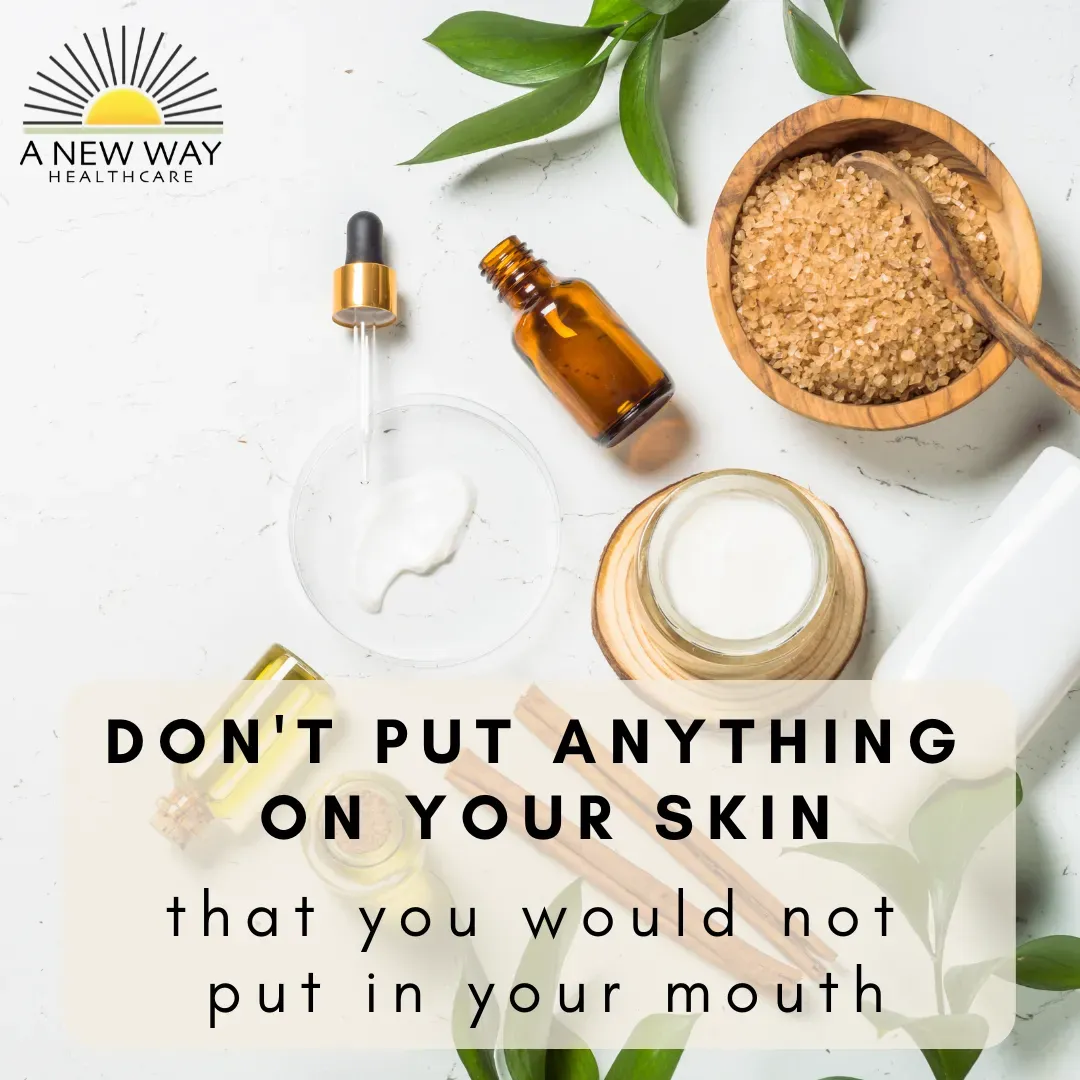
My rule is simple: Don't put anything on your skin that you wouldn't put in your mouth!
Your skin absorbs some of what you put on it, and certain ingredients can enter your body through your skin.
What's Really in Your Lotion?
Take a look at the label of your body lotion now. Would you take a bite/lick of it now? Unfortunately, many ingredients in common cosmetics raise health questions. They surely help bind other ingredients, foam, add color or fragrance and help the consistency of the products, but that doesn't mean they're good for us.
How Skincare Ingredients May Affect Your Hormones
Regular use of some of these ingredients has been linked to hormonal imbalances, and the side effects can be hard to trace. Hormone and metabolic lab testing can help find the cause.
Researchers call these chemicals endocrine disruptors. They may mimic, block or interfere with your body's own hormones. For women in their 40s, these changes can overlap with hidden perimenopause symptoms.
Clean Ingredients Your Skin Will Love
Ingredients such as plant oils (including most cooking oils), shea and cocoa butter, natural beeswax and many more, completely natural and edible ingredients will not only keep your skin healthy and glowing, but nourish your body instead of poisoning it. A quick tip: look for products labeled "fragrance free," since the single word "fragrance" on a label can stand for a blend of many ingredients.
Make Your Own Natural Lotion
There are plenty of blogs and tutorials online that will show you how to make natural lotions (one of our favorite easy examples here), creams, soaps, deodorants, toners, scrubs and so much more, with links to where to get ingredients. But if that sounds too challenging to you read below.
Switch to Clean Products One at a Time
Consider changing to non-toxic skin care products one product at a time. More and more natural brands are offering quality cosmetics with clean ingredients. Also, local shops and farmers markets are a great resource to find vendors who make their own skin products. Yes, they cost more than mass-produced items stuffed with toxic ingredients, but your health is worth the investment. This goes for makeup and cleaners too!
Get Help Finding the Cause
If you think your products are affecting how you feel, our New You program offers hormone and functional medicine care in Jacksonville Beach. Call (904) 299-0373 to get started.
Frequently Asked Questions
1. Can my skin really absorb what's in my lotion?
Yes, some of it. Your skin is a strong barrier, but it isn't a wall. Health experts note that some chemicals in personal care products, such as parabens, can enter your body through your skin. That's a good reason to read the labels on the products you use every day, like body lotion, and choose ones with simple ingredients you recognize.
2. What are endocrine disruptors?
Endocrine disruptors are chemicals that may mimic, block or interfere with your body's hormones. They show up in many everyday products, including some cosmetics, food packaging and pesticides. Experts say they're nearly everywhere, so you can't avoid them completely. The good news is that you can lower your exposure by making informed choices about the products you buy and use.
3. Are parabens and phthalates in lotion dangerous?
The science is still unsettled. The FDA says it does not currently have information showing that parabens, as used in cosmetics, affect human health, and it has no evidence that phthalates in cosmetics pose a safety risk. Some studies have raised questions about hormone effects, and researchers say more studies are needed. Choosing paraben-free and phthalate-free products is a simple step if you'd rather play it safe.
4. Why does "fragrance" on a label matter?
U.S. labeling rules let companies list a fragrance blend as one word: "fragrance." That single word can cover many different ingredients, and phthalates are sometimes among them, so you can't tell from the label alone. If you want fewer unknowns, choose products labeled fragrance free. Keep in mind that "unscented" isn't the same thing and may still contain fragrance ingredients.
5. Do "natural" or "clean" labels mean a product is safe?
Not necessarily. The FDA has no definition of "natural" for cosmetics, and terms like "clean" have no set standard, so brands can use them freely. Natural ingredients can still cause skin reactions. The ingredient list tells you more than the front of the bottle, so look for short lists with names you know, like shea butter, beeswax and plant oils.
Key Takeaways
- A simple rule: don't put anything on your skin that you wouldn't put in your mouth.
- Your skin absorbs some of what you apply, so read your lotion label.
- Some skincare ingredients have been linked to hormonal imbalances whose symptoms can be hard to trace.
- Natural ingredients like plant oils, shea and cocoa butter and beeswax help nourish your skin.
- Swap to clean products one at a time, because your health is worth the investment.